Kingswell Team
Expert Insight
Common Electrical Issues
Residential electrical systems are generally reliable, but connections, fittings, protective devices, and appliances can deteriorate or fail. Recognising warning signs early can reduce risk and help an electrician diagnose the issue before it becomes more disruptive.
Below we detail the most frequent residential electrical issues, what causes them, and most critically, when you need to stop trying DIY fixes and call in a licensed professional.
1. Frequent Breaker Tripping
Your circuit breakers are designed to cut power when a circuit is carrying more current than it is safely rated for. If a specific breaker trips occasionally when you turn on a high-draw appliance (like a heater or vacuum), it's doing its job. However, if a breaker trips repeatedly or won't reset at all, you have a problem.
This is usually caused by either an overloaded circuit (too many appliances on one line) or a "short circuit" (where a live wire touches a neutral wire, causing a massive surge in current). Never try to force a breaker to stay on or attempt to replace it with a higher-rated one. This is a severe fire risk that requires immediate diagnostic testing.
2. Flickering or Dimming Lights
While a single flickering bulb is usually just a sign that the globe needs replacing, lights that dim or flicker across an entire room—especially when another appliance turns on—indicate a network-level issue.
This drop in voltage is often caused by a poor connection, either in the light switch itself, the dedicated lighting circuit in your switchboard, or even at the main service drop from the street. Loose connections create electrical arcing, which generates intense heat and is a leading cause of ceiling fires.
3. Dead Outlets and Switches
A wall outlet that suddenly stops working or a light switch that feels "spongy" and fails to activate the light should never be ignored. Often, homeowners will simply stop using that particular socket and rely on extension cords elsewhere. This is dangerous.
A dead outlet without a tripped breaker usually indicates that the internal wiring has deteriorated or melted, severing the connection. Continuing to push power through the remaining circuit can exacerbate the damage behind the wall.
4. Burning Smells or Buzzing Sounds
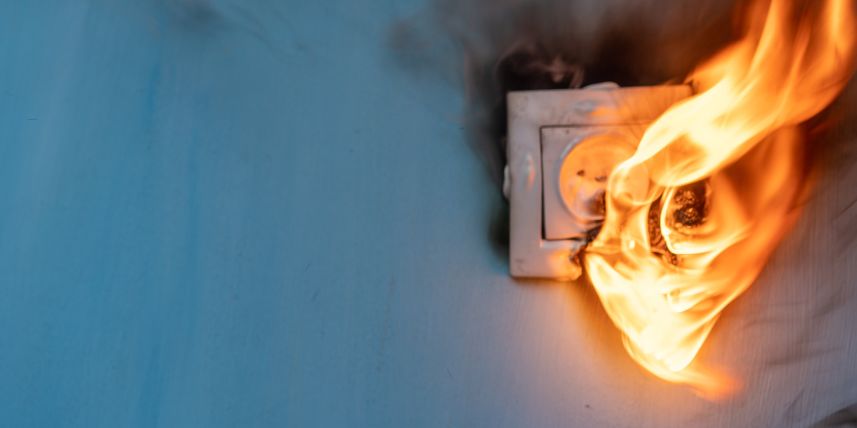
If you detect an acrid, plastic-burning smell near an outlet, switch, or your main switchboard, turn off the main power immediately and call an emergency electrician. You are actively smelling the insulation on your wiring melting away.
Similarly, a faint, continuous buzzing sound from a fixture or breaker box indicates electrical arcing—current jumping across a tiny gap between loose wires. Both of these sensory warnings are the final indicators before an electrical fire ignites.
The Golden Rule of Electrical Safety
Never attempt to repair or inspect wiring behind a wall plate or inside a switchboard yourself. In Western Australia, it is illegal and highly dangerous for anyone other than a licensed electrician to perform fixed electrical work.
Ready to Upgrade?
Protect your home against electrical faults. Contact Kingswell Electrics today for a comprehensive switchboard assessment.